


What does a rough diamond look like
WHAT DOES A ROUGH DIAMOND LOOK LIKE?
A highly coveted stone, diamonds are fascinating and are regularly used to set jewellery, especially engagement rings. A symbol of purity, this stone is expensive, coveted in all jewellery shops, and is sometimes faced with imitations that damage its essence...
This natural diamond originates from all over the world, mainly from deposits in Africa. Created millions of years ago, this mineral, formed from carbon and heat, was brought to the Earth's surface through volcanic paths and is now the king of the gemstone market. This stone, with its exceptional characteristics and maximum hardness, is regularly used to set engagement rings, wedding rings, and also in custom jewellery making experiences.
A rough diamond, in its natural state, i.e. uncut and as found in nature, is regularly confused with cubic zirconia (a natural mineral). A rough diamond generally has an octahedral shape. It should not be confused with moissanite, pyrite, or cubic zirconia. Indeed, moissanite resembles a diamond because this stone is almost colourless at first glance. Moissanite is mainly composed of silicon carbide, unlike diamond, which is composed of pure carbon.
Maison Lorenz Bäumer helps you recognise this pure carbon crystal called diamond.
The Different Forms of Uncut Rough Diamonds
To recognize unpolished rough diamonds, you need to pay attention to their shape. There are four crystalline forms for rough diamonds:
- Octahedron and must have eight triangular faces, twelve edges, or six vertices
- Cube with six square faces, twelve edges, and eight vertices
- Dodecahedron, with twelve pentagonal facets, thirty edges, and twenty vertices
- Rhombic dodecahedron with twelve rhombic faces, twenty-four edges, and fourteen vertices
- Octahedron with eight triangular faces, twelve edges, and six vertices
- Cube with six square faces, twelve edges, and eight vertices
- Dodecahedron with twelve pentagonal faces, thirty edges, and twenty vertices
- Rhombic dodecahedron with twelve rhombic faces, twenty-four edges, and fourteen vertices.
To recognize it, try reading through it. If you can do so, clearly distinguishing the characters written on the paper, then it is not a rough diamond; conversely, it is a diamond. Also, a diamond reflects light. Indeed, diamond is one of the natural stones with the highest refractive index. This refractive index varies from 2.417 to 2.419, unlike water which is 1.33 or quartz, 1.46.
The hardness of diamonds is also an exceptional characteristic of these natural crystals. Indeed, diamonds are resistant to everything, unlike other stones such as quartz, ruby, or emerald, which are more vulnerable.
What are the different types of rough diamonds?
Diamonds can come in different forms. Indeed, they can be in the form of:
- Rough cubic: this is the rough form of the diamond, the one in which it is found in mines.
- Polished: this form is obtained after the diamond has been worked in the laboratory. Once polished, it can be used to be set in jewelry.
- Slices: slices of rough diamond
The different colours of rough diamond
The color of a raw diamond varies depending on the impurities present in its crystalline structure. For this reason, the color palette is vast, ranging from yellow to black, including brown, green, or blue. This mineral is more often found in black. Furthermore, in its raw state, a diamond does not shine. Indeed, it only shines once it has been polished, making it an incredible gemstone often set in engagement rings.
Or should we work on the rough diamond aspect?
Rough diamonds are then transformed into precious stones in the laboratory. They are born deep within the earth and rise to the surface through volcanic pipes. Once mined, diamonds are broken, washed, and pre-sorted through a specific process. Stones suitable for jewelry are then sold by distributors on diamond exchanges, eventually reaching diamond cutters who will work, polish, and cut the stone to prepare it for setting in jewelry. The price of diamonds will vary according to their "4Cs" (cut, carat, color, clarity).
What is the price of a rough diamond?
Transforming a rough diamond is no easy task. Indeed, diamond is a hard and robust stone. Furthermore, some rough stones have numerous defects or inclusions, making their exploitation almost impossible.
To become a marketable diamond in jewelry, this rough diamond must go through several transformation phases. First, the rough diamond undergoes treatments to change its color and optimize its clarity by removing as many imperfections as possible and achieving better brilliance. In other words, during this transformation phase, the diamond will change its appearance to become an exceptional diamond that can be set in jewelry.
To improve its clarity, the rough diamond is often worked with a laser to remove impurities and inclusions as best as possible. Also, in the laboratory, diamond cutters will manipulate the weight of the diamonds to try to maximize it. Indeed, the greater the weight of a diamond, the more valuable it becomes and thus, the higher its price. The same applies to treatments carried out on the rough diamond to optimize its cut. Indeed, the cut of the diamond allows it to reflect light across all its facets and thus, make it shine more. In this sense, techniques exist to give this rough stone the ideal shape. For this, the diamond is cut, refined, faceted, and polished in every detail through several transformation techniques (cleaving, sawing, bruting, cross-cutting, brillianting, etc.).
Finally, treatments are carried out on the rough diamond to change its color. Indeed, color is one of the most determining criteria for a diamond's value. Several techniques exist to modify and optimize its color. For example, the irradiation technique involves bombarding particles that give the diamond a color or improve its existing one through the nature and intensity of these particles. With heating, the diamond's color is immediately modified. Then, the stone undergoes treatment to stabilize and maintain its color.
For diamonds of poor quality, there is a technique consisting of filling the fractures of a diamond with dye to modify or nuance its color. Also, a technique called "coating" allows the diamond to be covered with a thin colored layer, but these techniques are reserved only for stones of insufficient quality.
A diamond is always supplied with its certificate of authenticity. This "identity document" of the stone is unique. Thus, if you buy a diamond at auction or a piece of jewelry set with a diamond, you will always have its certificate of authenticity prepared by the laboratory (GIA) where the stone was processed. This certificate gathers crucial information for your diamond such as its carat weight, cut, origin, etc.
These natural minerals and crystals that have come to us from the earth for millions of years are full of exceptional qualities highly valued in jewelry. Regarding the care of your diamond, we recommend cleaning it with soapy water. This method is the most effective and the one most likely to respect your diamond and your jewelry, especially if the latter is custom-made.
Here's how these rough diamonds found all over the world, mainly in deposits in Africa, are worked to become highly coveted gemstones in the world of jewelry.
How do you go from a rough diamond to a polished diamond?
This stone is extremely sought after for its beauty and high value. The price of a diamond once polished and lab-worked is determined by criteria related to the diamond's weight, expressed in carats, the stone's color, and also the stone's clarity (whether it contains inclusions or not).
The price of a rough diamond is obtained by basing it on its crystalline form, which determines the percentage yield of the rough stone. However, the price of a rough diamond is difficult to assess because the criteria are numerous and varied. It will truly depend on the rough diamond's color, clarity, and also the inclusions it contains. Indeed, if the stone only has inclusions and cannot be worked, then the diamond's price will necessarily be lower than that of a rough diamond with very few inclusions and capable of creating a significant stone of a certain number of carats.
The price of diamonds constantly evolves over the years. In other words, they increase in value. On average, a one-carat diamond can be worth between 2,000 and 30,000 euros. Sometimes it can be more, or sometimes less. As explained previously, it will truly depend on the diamond's 4Cs, its origin, etc. It is clear that a diamond with more carats than another will be more expensive. In other words, there is no fixed and universal price.
-
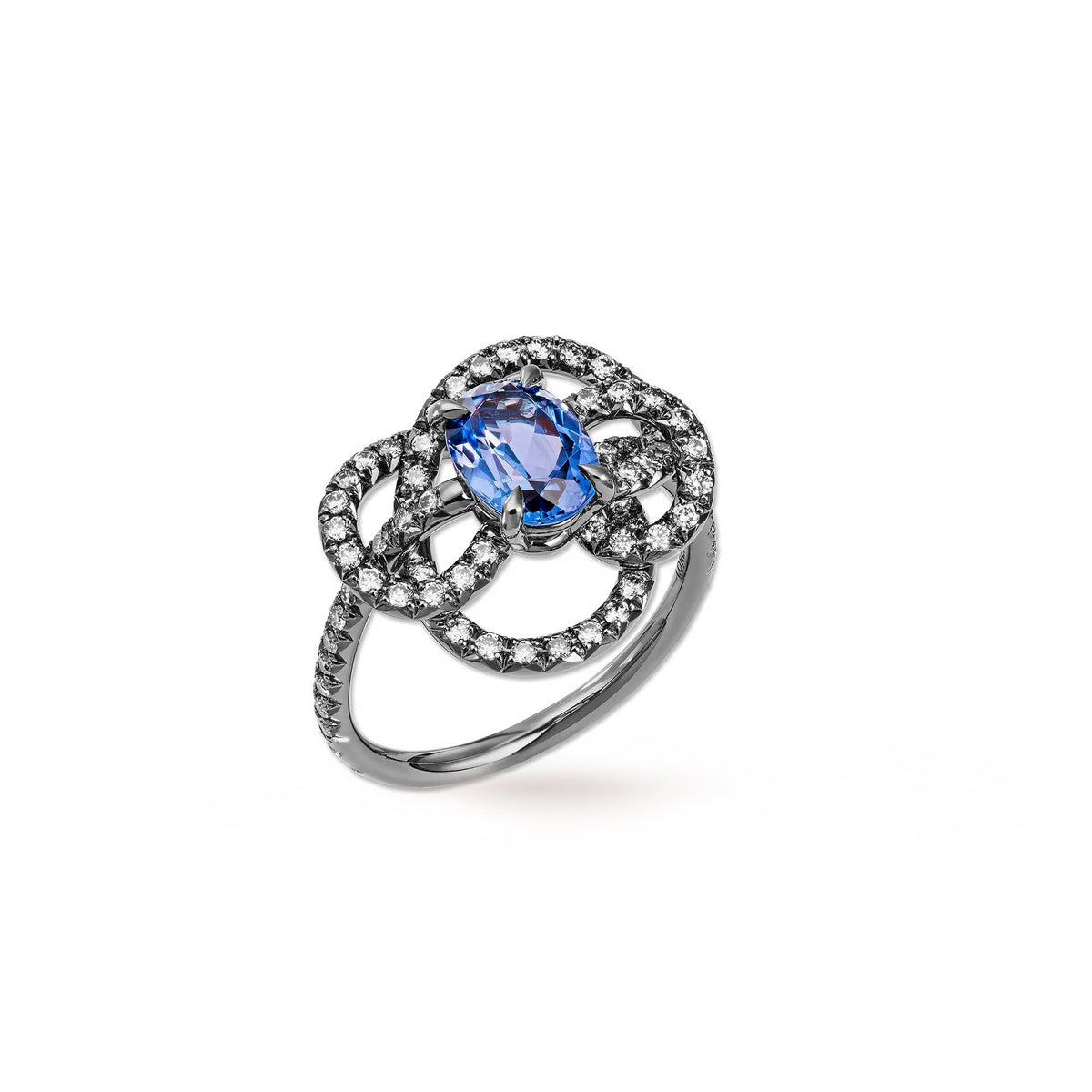
Black gold ring
-

White gold wedding ring
-

luxury women's bracelet
-

jewelry necklace
-

Rose gold ring
-

Gold earrings
-

aquamarine
-

custom ring


